
Biography
A BIOGRAPHY OF BELAL MUHAMMAD

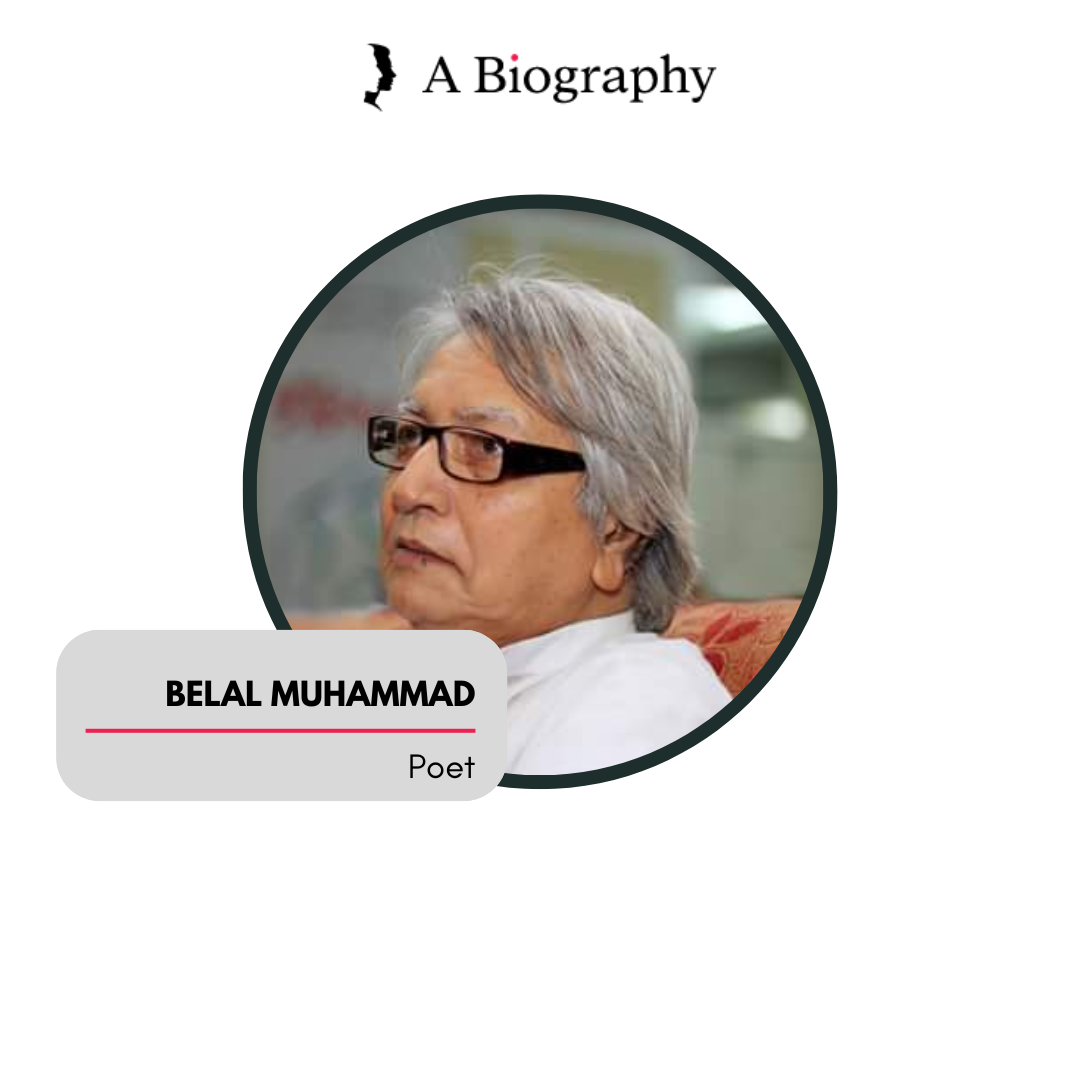
Table of Contents
ToggleBiography of Belal Muhammad
Founder of Swadhin Bangla Betar Kendra
(20 February 1936 – 30 July 2013)
Summary
Belal Muhammad was one of the founders and leading organizers of the radio station “Swadhin Bangla Biplobi Betar Kendra”. During the entire liberation war, the radio station played a vital role from the frontline. The declaration of war on 26 March 1971 was even announced through the media. Because of his tremendous dedication during the liberation war, he was honored with the “Independence Day Award” (2010) and Bangla Academy Award” (2011). He died on July 30, 2013, in Dhaka, and donated his dead body to the Sher-e-Bangla Medical College.
Introduction
If someone ever asks you what is the best thing you have ever heard. What will be your answer? Your favorite song, right? The one that soothes your heart or the song that relieves your mind. But there is one more utterance that gives us goosebumps and no matter how many times we listen it enlightens our souls with deep patriotism. It is the declaration of the independence of our nation. The moment, we feel the freedom not just by our existence but within our core. However, the curiosity may come to your mind often that in such a crucial moment, when no one even dared to raise their voice against the Pakistan Army, who built the radio station that attached the whole of East Pakistan ignoring such vicious death threats. You will be surprised, the dearing patriotic soul is none but Belal Muhammad.
Belal Muhammad was one of the prominent persons of Bangladesh who is the founder of “Swadhin Bangla Betar Kendra”. He is one of the bravest sons of the nation who never let down his country even in the darkest moments of history. When his motherland was facing its most crucial war, he appeared as a blessing and organized the radio station “Swadhin Bangla Betar Kendra” which turned into a game changer during the war. Even though he faced untold death threats and obstacles in his path, he never turned his back on his deepest patriotism for his country. Because of his enormous contribution to the war in 1971, he was honored with the highest state award “The Independence Day Award” in 2010 and the “Bangla Academy Award” in 2011.
So, let’s learn about the incredible journey behind the scenes of such a patriotic soul, Belal Muhammad.
Life of "Belal Muhammad" at a glance:
➢ Full Name: Belal Muhammad
➢ Born: 20 February 1936
➢ Birthplace: Musapur Union, Sandwip, Chittagong, British India (now Bangladesh)
➢ Died: 30 July 2013 (aged 77)
➢ Place of Death: Apollo Hospital, Dhaka
➢ Burial: Body donated to Sher-e-Bangla Medical College (as per his wish)
➢ Father: Moulovi Muhammad Yaqub
➢ Mother: Mahmuda Khanom
➢ Spouse: (Name not specified, deceased 1973)
➢ Children: One son, Ananda (died 1998, aged 32)
Early Life & Education
➢ Grew up in Chittagong, active in student politics
➢Early member of the Student Union of Chittagong Committee
Career & Liberation War Role
➢1964: Joined Dainik Azadi (newspaper) as sub-editor; later worked at Radio Pakistan
➢March 1971: Left Radio Pakistan to establish Swadhin Bangla Biplobi Betar Kendra
➢26 March 1971: Broadcast Major Ziaur Rahman’s declaration of independence from Kalurghat
Key Contributions:
➢Orchestrated wartime broadcasts under constant threat
➢Used code words (Chorom Potro) to relay secret messages
➢Signature tune: “Joy Bangla Banglar Joy”
Post-War: Transitioned station to Bangladesh Betar (December 1971)
Awards & Honors
➢2010: Independence Day Award (Bangladesh’s highest civilian honor)
➢2011: Bangla Academy Literary Award
Legacy
➢Remembered as the “Voice of Liberation” for his wartime radio leadership
➢Documentaries and books highlight his role in 1971
➢Symbol of courage and innovation under oppression
Early Life & Background
Belal Muhammad was born on February 20, 1936. His birthplace was at Musapur Union in Sandwip, Chittagong. He hailed from a Bengali Muslim family to the parents Moulovi Muhammad Yaqub and Mahmuda Khanom. Muhammad spent his childhood with his family in Chittagong. He completed his education at a nearby college in his hometown. During his student life, he was actively involved in social movements and was one of the first members of the “Student Union of Chittagong Committee”.
In 1964, Muhammad joined “Dainik Azadi” as the sub-editor and in the same year, he started to work at “Radio Pakistan”. During the declaration of the non-cooperation movement by Sheikh Mujibur Rahman on March 7, 1971, he was working as a government officer in the “Pakistan Radio”. He was appointed an artist and scriptwriter for Radio Pakistan. But soon he decided to leave his job as he was deeply determined to protect his nation. He was very well aware that in such dark mist, radio was the only medium to enhance the communication to the whole parts of East Pakistan. Thus the thought came to his mind of establishing the first-ever radio station in East Pakistan “Swadhin Bangla Biplobi Betar Kendra”.
Swadhin Bangla Betar Kendra
As Belal Muhammad was involved in Radio Pakistan, he had an adequate idea of the process of organizing a radio station. 26 March 1971, when the nation witnessed its most horrifying genocide, all the people of East Pakistan were shivering in tremendous fear. During such a devastating moment, the whole nation got the lamp of hope as they heard, “Swadhin Bangla Biplobi Betar Kendra theke ami Major Zia Bolchhi”. The entire nation gained their courage back and jumped toward war to snatch the independence of the motherland.
During such ghastly mist of the Liberation War, the declaration on the radio was considered to be the first organized war effort. However, the radio station was at the peak of risk as no one in East Pakistan ever dared to establish any media of communication against West Pakistan. Fortunately, the Mukti Bahini and the members of EBR providentially safeguarded the entire area and ensured the telecast of the “Swadhin Bangla Biplobi Betar Kendra”.
Besides Belal Muhammad, some prominent personas also stood with him even acknowledging how dreadful their lives could be. The patriotic souls were Abdullah Al Faruque, Program Producer of Radio Pakistan Chittagong Centre, Abul Kasem, Vice Principal of Fatikchari College, Aminur Rahman, technical assistant of Chittagong Station and Kazi Habibuddinn, a young businessman were the ones who joined the first evening session on 27 March. During the second session on March 28, Sharfuzzaman, Technical Operator, Syed Abdus Shaker, Radio Engineer, and Rashidul Hussain, Technical Assistant joined the activity in Kalurghat. On 29 March, other bright souls such as Rezaul Karim Chowdhury, a Technical Operator, and Mustafa Anwa, a Program Producer joined the afternoon session.
During the entire Liberation War, Belal Muhammad portrayed his greatest devotion through the “Swadhin Bangla Biplobi Betar Kendra”. They aired relentlessly as an organized war including patriotic songs and speeches to enlighten the courageous souls of the freedom fighters. However, the transmission capacity of the radio station was very limited. Soon, the information was picked up by a Japanese ship. Thus, Radio Australia and later the BBC started to re-transmit. The relief didn’t last long as the Pakistan Armed Forces unfortunately got the message and its air force bombed the entire area of the radio station just after running five days. Even in such a terrifying situation, Muhammad didn’t lose hope. They decided to break into two groups and immediately went to Agartala and Tripura with a transmission of 1 KW.
On April 3, 1971, they resuscitated the Swadhin Bangla Betar Kendra and broadcast from Bagapha, Tripura. Later they moved to Tripura and changed the name from “Swadhin Bangla Biplobi Betar Kendra” to “Bangladesh Betar”. Bangladesh Betar started its broadcast on December 6, 1971, with a new recognition. After the liberation of the nation, the radio station restarted its work for the first time in the independent soil on December 22, 1971. During the undaunted contribution of the “Swadhin Bangla Betar Kendra”, the whole country still remembers the services of prominent sons such as Belal Muhammad including Abul Quasem Shandeep, Mustafa Monwar, Abdullah Al Faruque, Syed Abdus Shaker, Rezaul Karim Chowdhury, Kazi Habib Uddin Moni, Rashedul Hossain, A. M. Sharfuzzaman and Aminur Rahman.
Awards and Achievements
Belal Mohammad was honored with the highest state honorary the “Swadhinata Padak (Independence Day Award)” in 2010 for his immense contribution during the Liberation War of Bangladesh. The next year, he achieved the “Bangla Academy Literary Award” for his writings on liberation war affairs.
Death
30 July is the date which is nothing but a day of grief for the entire nation. The leading organizer of the first radio station in East Pakistan (now Bangladesh), and the soul of the country, Belal Muhammad left his last breath on 30 July 2013 at the age of 77. He was going through severe old age complications for so long. As his health condition turned even worse, he was admitted to Apollo Hospital Dhaka. According to the brief of the duty manager at the hospital, he died at the Intensive Care Unit in the early morning around 5 am on Tuesday. According to his last wish, his dead body was donated to the Sher-e-Bangla Medical College.
Unknown Facts
● Belal Muhammad joined politics while he was a student and was the first member to join the Student Union’s Chittagong Committee.
● He started his career as the Deputy Editor of the Daily Azadi in 1964.
● Muhammad was the founder of the radio station “Swadhin Bangla Biplobi Betar Kendra”.
● The birthplace of the “Swadhin Bangla Biplobi Betar Kendra” (FreeBengal Radio Station) was the Mushtari Lodge.
● On 26 March 1971, the declaration of the Liberation War was telecasted at nearly 7:40 pm in Kalurghat (Chittagong) with the aid of a 10 KW medium wave transmitter.
● The radio station used to broadcast the war news through “Chorom Potro” which was considered as a stool pigeon during the war.
● “Joy Bangla Banglar Joy” was the signature tune of the “Swadhin Bangla Biplobi Betar Kendra”.
● On 30 March, the Pakistan Air Force bombed and damaged the area of “Swadhin Bangla Biplobi Betar Kendra”. Later on 3 April, the radio station restarted its activity.
● “Swadhin Bangla Biplobi Betar Kendra” was reformed as “Bangladesh Betar” on December 6, 1971.
● Belal Muhammad achieved the “Independence Day Award” in 2010 and the “Bangla Academy Award” in 2011.
● Muhamad’s wife left her last breath in 1973 and his only son, Ananda died at the age of 32 in 1998.
● After the death of Belal Muhammad in 2013, his dead body was donated to Sher-e-Bangla Medical Hospital for the welfare of society.
Conclusion
Belal Muhammad was one of the nation’s most dedicated sons who never bowed to anyone for the sake of his motherland. He ignored all the threats and menaces and gave his entire life for the betterment of his country. When his people were facing their darkest moment, he brought a ray of hope to the thousands of souls and continued his patriotism till his last breath. That’s why, his contribution and dedication will always remain in the core of the crore hearts of his nation.
References
https://en.wikipedia.org/wiki/Belal_Muhammad_(activist)
https://bdnews24.com/bangladesh/belal-mohammad-no-more
https://www.thedailystar.net/op-ed/let-me-tell-it-once-again-73963
https://www.dhakatribune.com/bangladesh/bangladesh-others/36550/freedom-fighter-belal-mohammad-dies
https://www.thedailystar.net/news/freedom-fighter-belal-mohammad-passes-away
https://en.wikipedia.org/wiki/Swadhin_Bangla_Betar_Kendra
Disclaimer
All content on this website is provided in good faith and only for general information purposes. A Biography makes no guarantees regarding the information’s completeness, reliability, or correctness. Any action you take as a result of the material on this website is entirely at your own risk. A Biography is not responsible for any losses or damages incurred as a result of using our website

