
Biography
A BIOGRAPHY OF ALTAF MAHMUD

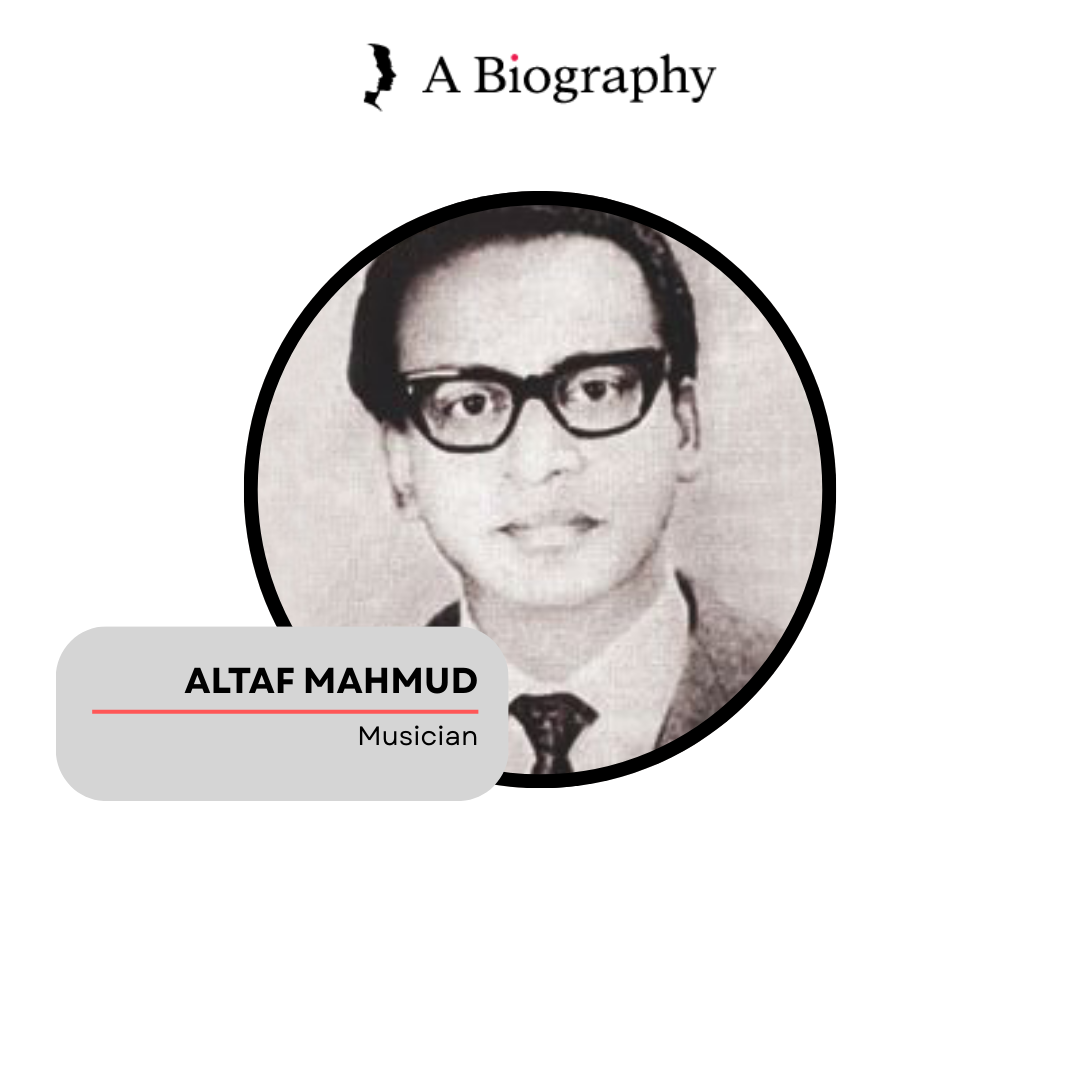
A biography of Altaf Mahmud
Musician
(23 December 1933 – 11 September 1971)
Table of Contents
ToggleSummary
Altaf Mahmud was a freedom fighter, composer, and cultural activist whose life and work continue to be at the centre of Bangladesh’s history. Born in Barisal in 1933 he took up painting and music before becoming one of this country’s most influential composers. His best-known composition, Amar Bhaier Rokte Rangano, came to be an anthem of the Language Movement and the symbol of Bengali identity. Altaf, moreover, was a leading activist in the Liberation War, providing his home as a shelter for freedom fighters and using his art to incite resistance.
Despite his commitment, he was arrested and ended up in martyrdom for the Pakistan Army in 1971. Altaf Mahmud’s music, his sacrifice, and his permanent place as a national hero lives on in his posthumous award the Ekushey Padak and Independence Day Award. He’s the story of courage, creativity, and freedom.
Introduction
Few can match Altaf Mahmud’s multifaceted existence as a cultural activist, freedom fighter, and martyr, whose work is as fundamental to the nation’s history as his own. Altaf Mahmud was a name, a revolution, a symphony, and a movement. His song Amar Bhaier Rokte Rangano is a timeless Bengali identity hymn that represents the sacrifice and struggle of a whole people.
Mahmud was a musical trigger, but his story is far more extensive. It is an unrelenting pursuit of justice, perseverance, and patriotism. His tale, which takes place between the tranquil town of Barisal and the tense Liberation War battlefields, is a powerful source of motivation for future generations.
Life of "Altaf Mahmud" at a Glance
Personal Details
➢ Full Name: Altaf Mahmud
➢ Date of Birth: 23 December 1933
➢ Birth Place: Patarchar, Barisal, Bengal (now Bangladesh)
➢ Died: 11 September 1971 (aged 37)
➢ Cause of Death: Executed by Pakistani forces during the Liberation War
➢ Burial Site: Unknown (body never recovered)
➢ Religion: Islam
➢ Nationality: Bangladeshi
Education
➢ Early Schooling: Barisal Zilla School (Matriculated, 1948)
➢ Higher Education:
-BM College, Barisal
-Calcutta Arts School (Painting)
-Studied classical music under Ustad Abdul Kader Khan (Karachi)
Career & Contributions
➢ Cultural Activism:
-Joined Dhumketu Shilpi Sangha (1950s)
-Composed Gano Sangeet (People’s Songs) for mass mobilization
-Music director for films: Jibon Theke Neya, Tanha, Kaise Kahu
➢Literary/Musical Works:
-Composed “Amar Bhaier Rokte Rangano” (1969) – Anthem of the Language Movement
-Blended folk melodies with revolutionary themes
➢ Political Role:
-Member of Kranti Shilpi Gosthi (Artists’ Revolutionary Group)
-Used art to resist cultural oppression
Role in Liberation War (1971)
➢ Sheltered freedom fighters in his Dhaka home
➢ Provided logistical support to resistance operations
➢ Arrested on 30 August 1971 by Pakistani forces
➢ Tortured and martyred for refusing to reveal resistance networks
Awards & Honors (Posthumous)
➢ Ekushey Padak (1977) – For contributions to the Language Movement
➢ Independence Award (2004) – Highest civilian honor for wartime sacrifice
Little-Known Facts
➢ Initially trained as a painter before transitioning to music
➢ Denied attendance at the 1956 Vienna Peace Conference by Pakistani authorities
➢ His home was a secret hub for freedom fighters during 1971
➢ Family members were also arrested and tortured alongside him
Legacy
➢ “Amar Bhaier Rokte Rangano” remains the definitive anthem for Ekushé February (Language Movement Day)
➢ Symbolizes the fusion of art and revolution in Bangladeshi history
➢ Remembered as a martyr who weaponized culture for liberation
Early Life and Background
Patarchar in Barisal welcomed on December 23, 1933, a boy who would one day become a symbol of national pride. Altaf Mahmud hailed from a family that had been rooted in the simplicity of rural life, and was raised with the beauty of nature: the soft lilt of river currents, the dandling of leaves in the breeze and the chippy calls of boatmen. From a young age, these elements shaped his artistic temperament.
Altaf was also a different person, even as a child. While his agemates played, he sunk into the world of art and sound. His mother would regularly discover him sketching pictures on scraps of paper, writing lyrics about the life around him. The beginning of his explorations worked as these hints at the creative force he would eventually be.
Altaf matriculated from Barisal Zilla School in 1948 and followed up with BM College. His spirit, however, wanted more than that. He felt pulled by the jolly penumbra of Calcutta and joined the Calcutta Arts School. He was here, where he first became formally interested in painting, directed by Beatitudes, who saw the potential.
Altaf found his way to Gano Sangeet (songs of the people), under the tutelage of the renowned violinist Suren Roy. The songs he wrote were not the collective songs or hymns from groups of ordinary men and women, the ones that truly resonated with him as he registered the entirety of his own worldview. The art they planted these seeds with became a lifelong commitment to use art for activism and change.
Career
Altaf Mahmud’s life took a turn in the 1950s. He moved to Dhaka where he joined the Dhumketu Shilpi Sangha where his compositions receive recognition for their emotional depth and cultural relevance. He didn’t play music to entertain; his music was a hard burden on people’s aspirations and struggles.
Altaf was invited to the Vienna Peace Conference in 1956. But Pakistani authorities had taken his passport, preventing it from granting him the opportunity to represent his country on an international stage. He, instead of going to Bangladesh, stayed in Karachi for seven years and under Ustad Abdul Kader Khan, mastered classical music. During this time, he worked with some of the other luminaries, solidifying his skills, and widening his musical vocabulary.
On his return to Dhaka in 1963 Altaf became one of the most prolific music directors in Bangladeshi cinema. For a filmmaker like Jibon Theke Neya, Tanha and Kaise Kahu, his compositions revealed his rich knowledge of human emotion and cultural nuance. His talent was noted beyond cinema, his works included painting and graphic art, and themes of resistance and freedom were present in his many works.
He was not just an artist. Through his artistic platform, Altaf was deeply involved in organizations like Kranti Shilpi Gosthi which he championed through his artistic platform to advance social and political causes. Altaf Mahmud’s work was always an act of calling to action—whether it was done through a song a painting, or a public performance.
Language Movement and the Creation of an Anthem
The Language Movement in the 1950s was a landmark of the life of Altaf Mahmud. Altaf used his music to galvanise the masses as Bengali speakers fought for recognition of their mother tongue. This is when his performances of Gano Sangeet became much more than songs, they were acts of defiance, rallying cries that helped galvanise thousands into action and to fight against their linguistic and cultural identity.
Amar bhaier rokte rangano was composed by Altaf in 1969 and he became immortal. The song was written by Abdul Gaffar Chowdhury for Zahir Raihan’s Jibon Theke Neya, enough to make the song alien to its cinematic origins and become the anthem of the Bengali people. The haunting melody, and evocative lyrics, captured the pain and pride of a nation trying to find justice. A symbol of the sacrifice and ideals of the Language Movement, the song was filed.
Altaf played a role beyond music. As a man of cultural and political activism, he was always able to endanger his own safety to stand for the rights of Bengali identity to be acknowledged. Cultural icon he became because of his role in the Language Movement.
Awards and Recognition
Many awards have paid respect to Altaf Mahmud’s life and his supreme sacrifices in Bengali culture and in the Liberation War. Posthumously, he was given Ekushey Padak in 1977 for his role in the Language Movement for his composition Amar Bhaier Rokte Rangano. But in 2004 he was awarded the Independence Day Award, the highest civilian honour in Bangladesh, for his sacrifices during the Liberation War.
He has also been remembered through awards given in his name, such as the Shaheed Altaf Mahmud Memorial Award and the Altaf Mahmud Padak. The honours recognise exceptional achievements in arts and activism to inspire Altaf’s legacy as it continues. International Mother Language Day is a yearly celebration of his work and testimony of his lasting influence on Bangladesh’s cultural consciousness.
Personal Life
Altaf Mahmud may have been famous, but his roots went all the way back to his family and community. His Dhaka home was much more than a residence – it was a haven for freedom fighters, during the Liberation War. Arms, supplies and, most importantly, an independent Bangladesh were hidden in its walls.
During one night of the war, a group of freedom fighters took refuge in Altaf’s home. He took all the risks with open arms, with food and reassurance. With quiet determination, he told them, ‘You fight for the country.’ “I will take care of you.”
They shared in the danger of his activism. At the same time, his brothers-in-law were also pulled in on a raid in 1971 and were also arrested along with him. One way in which Altaf proved his belief that every sacrifice is worth the fight for independence is in his life at home.
Death and Legacy
The Pakistan Army raided the Dhaka home of Altaf Mahmud on August 30 1971. He and his brothers-in-law were arrested and taken to a camp on Nakhalpara. He was sent to brutal torture and never gave away his comrades or the freedom fighters he supported. Despite his body being never recovered, he is believed to have been martyred in September 1971.
The Bengali people’s sacrifice of Altaf Mahmud was a symbol of resilience and courage displayed by them. Amar Bhaier Rokte Rangano still inspires generations to this day with his music, particularly. Altaf is remembered as not only a cultural icon but also as a martyr who sacrificed his life for his nation and won posthumously the Ekushey Padak and Independence Day Award. His compositions and the hearts of freedom-loving people carry on his legacy.
Unknown Facts
➢Painter First: Altaf was a fine painter before he became known as a composer; his musical sensibilities owed a great deal to his painting.
➢ Cinematic Impact: Jibon Theke Neya is a favourite of Bangladeshi cinemagoers, and his scores for films are benchmarks in the country’s cinema.
➢Family of Fighters: Altaf’s family, too, supported the Liberation War and were committed to it, they said.
➢Cultural Revolutionary: He helped to make the art and the activism converge in a way that sparked political change.
➢A Vision Lost: Bangladesh, who lost an artist with the potential to contribute more to the nation’s rich cultural gamut, was saddened by his death.
Conclusion
Altaf Mahmud’s life is a fantastic example of art’s most powerful ability to change. His music was entertainment but not merely so, it was a mass rallying cry for justice and freedom. Altaf is unequalled in his dedication to his people and his country from composing Amar Bhaier Rokte Rangano to sheltering freedom fighters during the Liberation War. Through his sacrifices leading to his final martyrdom, his legacy remains not only as a cultural icon but now as a national hero.
Altaf Mahmud’s spirit lives on in his music, even in death, inspiring the generations to come to fight for justice and embrace their cultural identity. His life’s work brings us back to the sacrifices you’d have to make on the path to freedom. While Altaf Mahmud is first and foremost a name within history, he remains a symbol of the resilience, creativity, and resolve of the Bengali people.
References
https://en.wikipedia.org/wiki/Altaf_Mahmud
https://en.banglapedia.org/index.php/Mahmud,_Shaheed_Altaf
https://www.thedailystar.net/star-weekend/mad-genius/altaf-mahmud-885202
https://sattacademy.com/academy/written-question?ques_id=56097
Disclaimer :
All content on this website is provided in good faith and only for general information purposes. A Biography makes no guarantees regarding the information’s completeness, reliability, or correctness. Any action you take as a result of the material on this website is entirely at your own risk. A Biography is not responsible for any losses or damages incurred as a result of using our website.

